1. Starting Motorcycle Track Days: The Complete Guide for Your First Day
Do you dream of discovering the sensations of the track, improving your riding skills safely, or simply having maximum fun with your motorcycle? This guide is for you!
Here, we tell you everything you need to know to prepare for your first motorcycle track day, step by step. We answer all the questions you have, without technical jargon and with a single objective: to reassure you and make you want to get started!
What is a motorcycle track day?
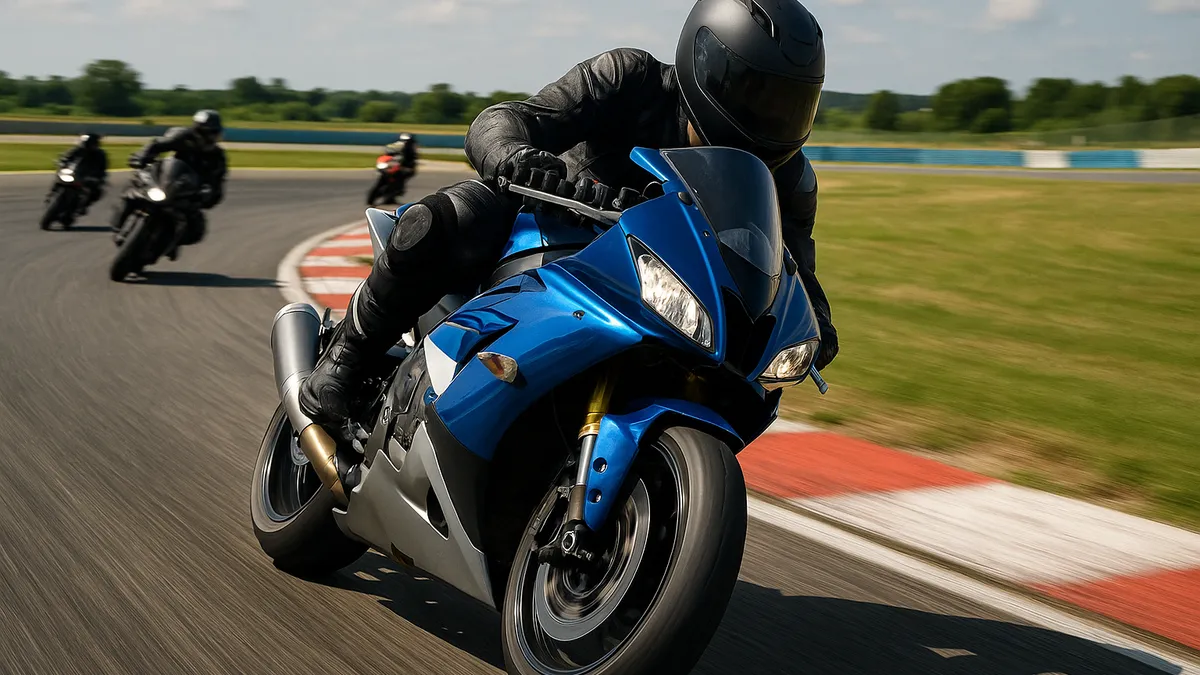
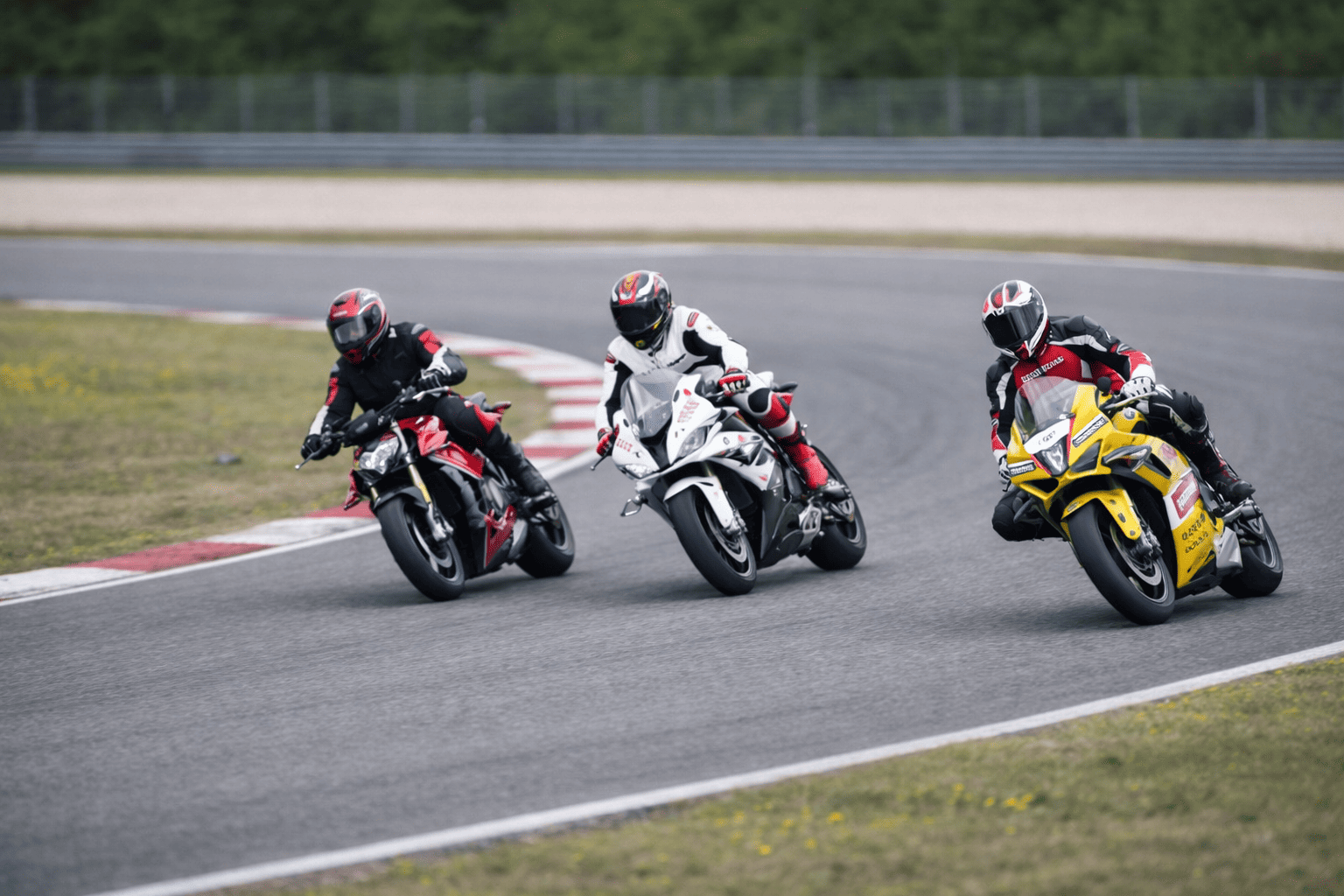
A motorcycle track day is a day of recreational riding organized on a closed circuit. Unlike a race, there is no official timing or competition. The main objective is to have fun and progress at your own pace, in a safe environment. Participants are divided into groups by skill level and ride in sessions of 15 to 20 minutes. Track marshals and often instructors are present to ensure safety and give advice. It's the ideal opportunity to discover the sensations of the track without the pressure of competition.
Who is this guide for?
Whether you have an A2 license or an A license, whether you own a road bike or a track bike, this guide is for you. The important thing is to want to discover the track, progress safely and have fun. If you're still hesitating, know that many riders start on the track with their road bike. The goal is above all to have fun and learn.
So, ready to get started?
See beginner track days near me
2. Understanding Motorcycle Track Days: More Than Just a Ride
A motorcycle track day is above all a day dedicated to the passion of motorcycles, organized in a safe and supervised environment. Imagine a closed circuit, motorcyclists from all walks of life sharing the same passion, and the possibility of pushing your limits in complete serenity. That's the spirit of motorcycle track days! These days are structured with skill level groups, sessions of 15 to 20 minutes, and the presence of competent staff, often including instructors.
What a motorcycle track day is not
It is important to distinguish a motorcycle track day from an official competition. Forget the pressure of the stopwatch and the pursuit of performance at all costs. Here, the emphasis is on the pleasure of riding and improving your skills. Unlike free practice without rules, a motorcycle track day is rigorously supervised, with strict safety rules (flags, direction of traffic, behavior on the track). It's not a race, but a supervised practice.
The different track day formats
There are several types of track days, adapted to different levels and objectives:
Leisure days: Ideal for a first experience, they emphasize fun and discovery.
"Riding + coaching" days: Perfect for progressing quickly, they include personalized coaching sessions with qualified instructors.
Open days: Offering more freedom, they may be less suitable for beginners due to potentially less strict supervision.
Frequently asked questions from beginners
"Do I need a race bike?" Absolutely not! Most participants ride with their road bike. The important thing is that it is in good condition and suitable for track use.
"Can I come with my A2 license?" Yes, the A2 license is accepted on most track days, but check the specific conditions of the organizer.
"Is my motorcycle insured on the track?" This is a crucial question! Classic motorcycle insurance generally does not cover damage on the track. Check with your insurer or the organizer to find out the available options (specific insurance, etc.).
3. How to Choose Your First Track Day?
Choosing your first track day is a crucial step for a successful and safe experience. Here are some criteria to consider to make the right choice:
The circuit: favor a track suitable for beginners
For a first experience, it is best to opt for a so-called "school" or not very fast circuit. These tracks, often more technical than the large speed circuits, allow you to familiarize yourself with the specificities of track riding without being intimidated by the speed and long straights.
Location and access: a practical aspect not to be neglected
Check the location of the circuit and its ease of access. If you are coming from far away, the possibility of arriving the day before can be a considerable advantage. Find out about accommodation options nearby (camping on site, hotels, etc.) and the amenities available in the paddock.
The organization: safety and quality criteria
Several elements demonstrate the seriousness of an organization and its ability to welcome beginners:
Well-defined skill level groups: Make sure that the groups are clearly defined and respected, in order to avoid dangerous speed differences.
Mandatory briefing: A complete briefing is essential to know the safety rules, the operation of the day and the meaning of the flags.
Supervision and instructors present: The presence of qualified instructors is a guarantee of quality and allows you to benefit from personalized advice.
Clear noise management: Check that the noise standards are clearly defined and respected, in order to avoid unpleasant surprises.
Rider reviews: Check the reviews of other participants to get an idea of the quality of the organization.
Adapt the skill level group to your experience
Organizers generally offer several skill level groups:
Beginner: This group is for you if it is your first time on the track or if you have very little experience. The goal is to discover the track and gain confidence, without seeking performance.
Intermediate / Confirmed: These groups are reserved for riders who have already ridden on the track and master the basics of riding. It is crucial not to overestimate your level to avoid putting yourself in danger and hindering other participants.
If you have the slightest doubt about which skill level group to choose, do not hesitate to contact the organizer or ask the instructors on site for advice. It is important to choose the right group to fully enjoy your day.
Special beginner days: an excellent choice to start
Some organizers offer days specially designed for beginners, with reinforced supervision and adapted exercises. These days are ideal for a first experience in complete serenity. Use our search engine and check the "special beginners" filter to find the days that meet your needs!
4. Equipment: Your Safety Armor on the Track
On the track, safety is paramount. The equipment you wear is your first line of defense in case of a fall. While some elements are mandatory, others are strongly recommended for optimal protection. Here is an overview of what to expect:
Approved full-face helmet: This is the basis. Make sure it complies with European standards (ECE 22.05 or ECE 22.06) and is in perfect condition. A helmet that has suffered an impact, even a slight one, must be replaced.
Leather suit: A leather suit, whether one-piece or two-piece (connected by a full 360° zip), is essential. Leather offers much greater abrasion resistance than other materials in the event of a slide.
Long leather gloves: They must completely cover the wrist and be reinforced at the palms and joints.
High boots: Opt for specific track boots, offering reinforced protection of the ankles and shins.
Approved back protector or airbag vest: A rigid back protector, meeting current safety standards, is mandatory on most circuits. A motorcycle airbag vest offers additional protection in the event of an impact.
Technical underwear: They facilitate the evacuation of perspiration and make wearing the suit more comfortable. Also consider a neck warmer and earplugs for optimal comfort.
Additional recommendations:
Airbag: Even if it is not always mandatory, an airbag vest is a wise investment for your safety.
Additional protections: Hip and chest protectors can provide an increased level of safety.
Although approved helmets and gloves are mandatory on the road, the equipment required on the track is more specific and more protective. On the track, we go further for safety, hence the leather suit, back protector, etc.
Checklist for the day before:
To not forget anything, prepare your equipment the day before and check each item: helmet, suit, back protector, boots, gloves, underwear, earplugs, water bottle (hydration is essential!).
5. Preparing Your Motorcycle Before the Track
Preparing your motorcycle is a crucial step to fully enjoy your track day safely. Here is a list of essential points to check before taking to the track:
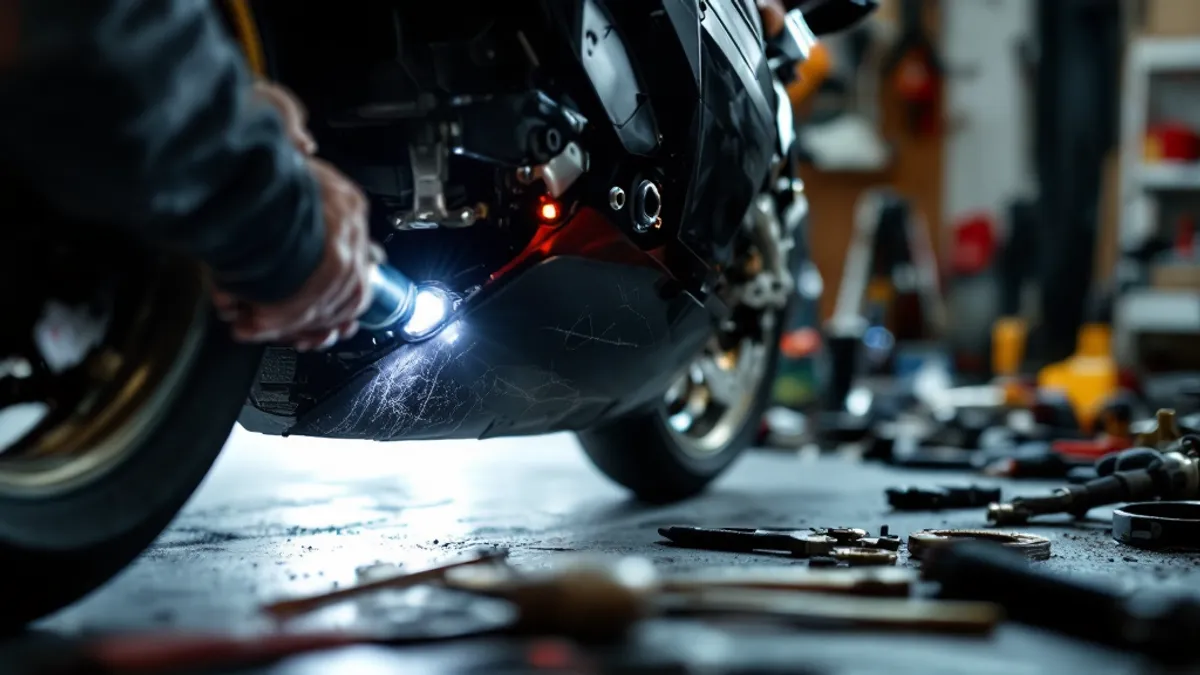
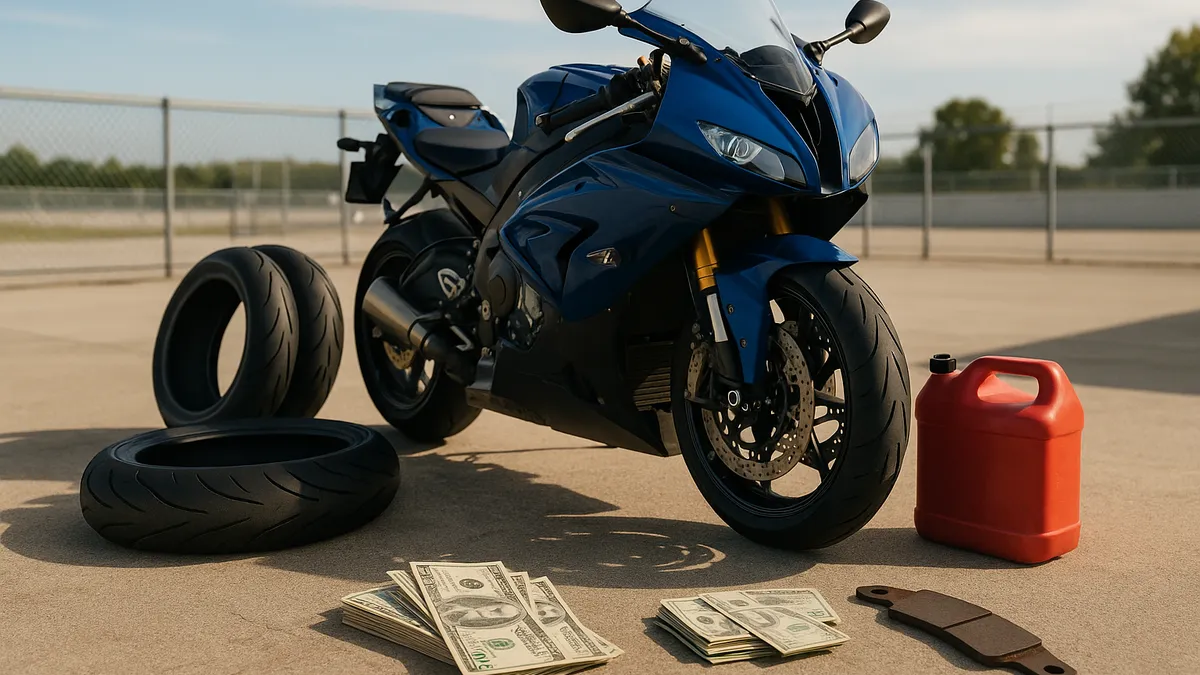
Tires: Carefully inspect your tires. Make sure they have correct and uniform wear, without flat spots. Check for cracks and the date of manufacture (DOT) which must be reasonably recent. Tires in good condition are essential for optimal grip.
Tire pressure: Tire pressure is a determining factor for the behavior of your motorcycle on the track. It must be adapted to the track conditions and your riding style. Generally, a pressure slightly lower than that used on the road is recommended. Consult the recommendations of your tire manufacturer or ask the track day organizer for advice.
Brakes: Check the condition of your brake pads. They must have enough margin to last all day. Also check the condition of the discs: they must not be warped or have cracks.
Brake fluid: Brake fluid is a vital element of the braking system. Old brake fluid can lose its effectiveness and cause a spongy lever feel. It is advisable to bleed the brake circuit and replace the fluid every two years, or even more often if you frequently use your motorcycle on the track. Make sure the brake lever offers a firm and consistent feel.
Transmission chain: Check the chain tension and make sure it is properly lubricated. A loose or poorly maintained chain can lead to loss of power and risk of breakage. Also look for any stiff links.
Oil level: Check the engine oil level and make sure it is between the minimum and maximum marks. Check for oil leaks at the engine and seals.
Coolant: Check the coolant level and make sure it is clean and free of deposits. Coolant in poor condition can cause the engine to overheat.
General tightening: Check the tightening of the fairings, levers, controls and mirrors (which will often be removed or taped for the track). Make sure nothing is likely to come loose during the ride.
Leaks: Carefully inspect your motorcycle for oil or coolant leaks. The presence of leaks may be a sign of a more serious problem and should be corrected before taking to the track.
Noise level: Circuits have noise limits to respect (for example, 95–100 dB). Check the noise limit of the circuit on which you are going to ride. If your motorcycle is equipped with a non-original exhaust system, make sure the DB-killer is fitted. Avoid very short silencers, which increase the noise level and can lead to exclusion from the circuit.
Tools and consumables: Prepare a toolbox containing the basic tools to make adjustments and minor repairs to your motorcycle. Don't forget the paddock stands, a pressure gauge to check the tire pressure, straps if you are transporting your motorcycle, as well as consumables such as oil, brake cleaner, chain grease, adhesive and Rilsan ties.
To make your task easier, you can download a motorcycle checklist ready to print (coming soon) so you don't forget anything!
6. Final Checklist: Papers, Logistics and Practical Information Before Departure
The day before the big day, make sure you don't forget anything! In addition to preparing your motorcycle, here are the essential elements to check for a track day in complete serenity:
The essential papers
Driving license and identity document: Always have them with you.
Motorcycle insurance certificate: Even if track coverage is often excluded, the organizer may ask for it.
FFM (Fédération Française de Motocyclisme) license or medical certificate (if required): Check with the organizer if one or the other is required. Some events require a specific license for the practice of motorcycling, others a simple medical certificate attesting to your fitness to practice.
The organizer's information not to be missed
Contact the organizer or consult the event website for the following information:
Paddock opening hours: To organize your arrival and installation.
Start time of administrative and technical checks: To anticipate and avoid last-minute stress.
Safety briefing time (mandatory): Crucial moment to know the rules of the day and the specificities of the circuit.
Cancellation conditions: In case of unforeseen circumstances, it is good to know the terms of reimbursement or postponement.
Rain insurance: Some organizers offer specific insurance in case of rain, allowing a partial or total refund of your registration.
Conditions of resale or transfer of place: If you can no longer participate, find out about the possibility of reselling your place to another rider. PlanTrackDay can help you with this process!
Transport and accommodation: travel organization
Think about how you are going to transport your motorcycle to the circuit:
On the road: If you choose this option, check the condition of your motorcycle and plan a suitable route.
On a trailer or in a van: Make sure you have the necessary equipment to properly secure your motorcycle and secure the transport. Having one or two straps in advance is not a luxury.
If the circuit is far from your home, consider booking accommodation:
Camping on the paddock: Economical and friendly solution, often offered by organizers.
Hotel near the circuit: For more comfort and tranquility.
Don't forget to bring what you need for your personal comfort (spare clothes, toiletries, etc.) and something to eat and drink throughout the day. You can find organizers offering on-site catering services.
7. Schedule of a Typical Day on the Track
That's it, the big day is approaching! Here's what you can expect during a typical track day. Generally, the activity starts early, often around 7:00 or 7:30 am, sometimes even the night before for those who want to settle in quietly.
Arrival and installation at the paddock
Once there, start by settling in the paddock. Unload your motorcycle, place it on paddock stands and set up your awning if you have one. It's time to create your workspace and get organized for the day.
Administrative formalities and technical inspection
Then go to the organizer's office for administrative formalities. You will need to present your papers (driving license, identity document, insurance, possibly FFM license or medical certificate if required), sign a waiver and collect your wristband or group sticker. A quick visual check of your motorcycle will be carried out (leaks, tires, brakes, safety equipment), as well as your rider equipment.
Some specific rules may apply, such as having to tape or remove your mirrors, tape your lights, or install a fluid recovery system if the ride is more "racing" oriented.
Depending on the circuits, a static check of the motorcycle may be carried out before your first entry on the track (motorcycle stationary). Some circuits also carry out a dynamic check during the sessions, with a microphone at the edge of the track to check the noise level of your motorcycle. Repeated exceeding of the noise limits may result in exclusion.
Safety briefing: a crucial moment
The safety briefing is generally scheduled around 8:30 am and is mandatory for all riders. Pay attention, because this briefing addresses essential points:
Safety reminders and instructions specific to the circuit.
Direction of traffic and authorized overtaking zones.
Meaning of the flags (yellow, red, black, checkered, oil...).
Organization of groups and schedule of the day.
Procedure in case of incident.
Riding sessions: the heart of the day
Riding sessions generally start around 9 am. Riders are divided into skill level groups (A/B/C or Beginner/Intermediate/Confirmed) and alternate on the track. The typical duration of a session is 15 to 20 minutes, with 5 to 7 sessions in total during the day, depending on the organization.
Important reminder for beginners: go out gradually, take the time to warm up your tires and brakes, don't try to set lap times from the start and let faster riders pass. The goal is to have fun and learn safely.
Between sessions: rest, checks and adjustments
Take advantage of the breaks between sessions to hydrate, rest and quickly check the condition of your motorcycle (tires, brakes, levels). It's also time to adjust your tire pressure according to track conditions and your sensations. Some organizers offer debriefings or personalized advice (coaching) to help you progress.
End of day: safe return
At the end of the day, after your last session, take the time to load your motorcycle and put away your equipment. Above all, check your level of fatigue before hitting the road again. Safety comes first, even after a day full of emotions!
8. First Time on the Track: Our Tips to Make the Most of It
A first track day is prepared! Here are some tips to approach this experience serenely and enjoy it fully:
Come accompanied! If possible, participate in this day with a friend or a small group. This allows you to share the experience, feel more comfortable and have reference points.
Adapt your pace. Forget your performance on the road! On the track, it is essential to ride below your usual level at the beginning. Focus on learning the trajectories, positioning on the track and adapting to this new environment. Building healthy automatisms is essential.
Forget the stopwatch. Your first day is not a race. Don't focus on lap times, but rather on improving your trajectory, your braking points and your riding smoothness. The lap time will come later, naturally.
Don't hesitate to ask the team. If you have the slightest doubt about your skill level group, if you need advice or if you encounter a problem, do not hesitate to ask for help from the instructors or the staff of the organizer. They are there to support you and help you progress safely.
And above all, don't forget: the goal is to have fun and live an unforgettable experience!